

Tractor Accidents on Rural Roads and Why Virginia Stands Out with Nearly 40,000 Farms
Experience. Results. Relationships.

Google Rating
5.0 










With over 25 years of experience, attorney Vaden Warren has tried more than 100 personal injury cases and is ready to get started with your claim right away.
Call for a Free Case EvaluationKey findings:
- From 2017 to 2021, more than 83,000 people died on rural roadways, making up 43% of all U.S. roadway deaths, even though only about 20% of Americans live in rural areas.
- NHTSA reported that in 2023, 16,656 people died in rural traffic crashes, and nearly two-thirds of rural fatalities involved roadway-departure crashes.
- The National Safety Council estimates that 15,000 collisions involving farm vehicles happen every year.
- Tractor-related incidents cause an average of 130 to 200 fatalities annually in the United States, making them the leading cause of occupational death in the agricultural sector.
- Virginia has about 39,000 farms covering 7.3 million acres, which increases the chance that tractors and other farm equipment will share rural roads with everyday traffic and raises the risk of tractor accidents and fatalities.
- Farm equipment is not limited to fields. It often uses public roads to move between properties, barns, markets, storage areas, and repair shops.
- Many tractors travel only 15 to 25 mph, while surrounding rural traffic may move 45 to 55 mph.
- Tractor accident scenarios include rear-end crashes, unsafe passing, left-turn collisions, wide-equipment sideswipes, low-light crashes, and run-off-road crashes.
- Drivers should be especially careful near hills, curves, field entrances, bridges, narrow shoulders, and areas with limited visibility.
- A tractor shifting right does not always mean it is safe to pass. It may be preparing for a wide left turn.
- In Virginia, tractor accident claims can be complicated by multiple insurance policies and the state’s contributory negligence rule.
In Virginia, tractors are not an unusual sight. They are part of the landscape, especially in communities where farms, family homes, school roads, and commuter routes often sit side by side. A driver may leave a town center, pass a few neighborhoods, and within minutes find themselves behind a tractor moving between fields. For farmers, that short trip on a public road may be a normal part of the workday. For the driver coming around a curve at 50 miles per hour, it may be a surprise that they have only seconds to understand.
That is what makes tractor accidents on rural roads so serious. These crashes often happen in ordinary places, on familiar roads, during everyday routines. A tractor may be moving 15 to 25 miles per hour while traffic behind it is moving twice as fast. A driver may try to pass just as the tractor prepares for a wide turn into a field. A hill, a narrow shoulder, afternoon glare, or one wrong assumption can turn a routine drive into a severe injury crash.
In a state with nearly 40,000 farms and 7.3 million acres of farmland, this is not a rare rural inconvenience. It is a real road safety issue for Virginia families, farm workers, commuters, and anyone who shares the road with slow-moving equipment.
Rural Roads Are Already Dangerous Before a Tractor Enters the Picture
Rural roads may look quiet, but they are some of the most dangerous roads in the country. From 2017 to 2021, more than 83,000 people died on rural roadways, making up 43% of all U.S. roadway deaths, even though only about 20% of Americans live in rural areas.
That matters because tractor accidents usually happen in this exact setting: two-lane roads, higher speeds, limited lighting, narrow shoulders, hills, curves, and field entrances that drivers may not notice until they are close.
NHTSA reported that in 2023, 16,656 people died in rural traffic crashes, and nearly two-thirds of rural fatalities involved roadway-departure crashes. This is especially relevant to tractor crashes because a driver may leave the road while trying to avoid slow-moving equipment, even if there is no direct impact with the tractor.
The danger increases when slow-moving farm equipment enters the road. A tractor moving 15 to 25 mph on a road where traffic is moving 45 to 55 mph creates a serious speed gap. Drivers may come up behind the equipment too quickly, try to pass in an unsafe spot, or swerve to avoid a crash.
The National Safety Council estimates that 15,000 collisions involving farm vehicles happen every year.
Tractor-related incidents cause an average of 130 to 200 fatalities annually in the United States, making them the leading cause of occupational death in the agricultural sector.
Why Virginia’s Nearly 40,000 Farms Make Tractor Safety a Statewide Issue
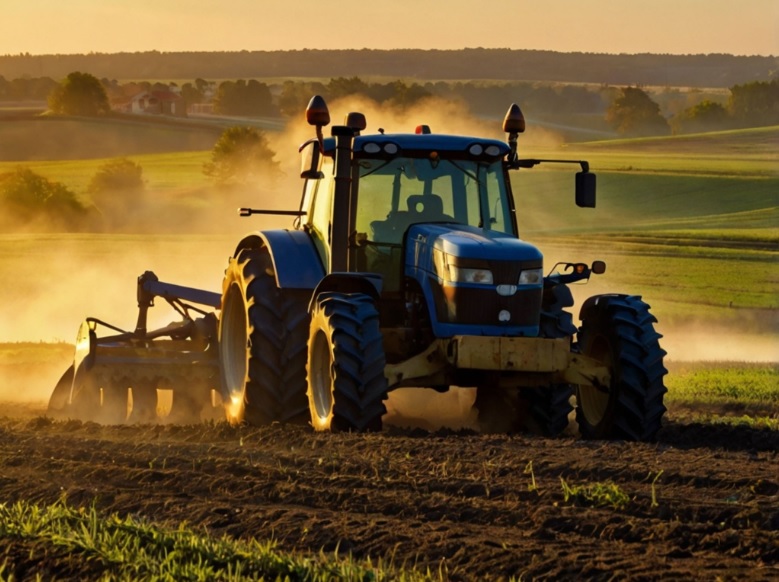
Virginia’s farm footprint is larger than many people realize. The Virginia Department of Agriculture and Consumer Services reports that the Commonwealth has 39,000 farms covering 7.3 million acres. The average Virginia farm is 187 acres; 95% of farms are family-owned, and the average farmer is 59.2 years old.
Those numbers matter on the road. Every farm needs access to fields, barns, storage areas, repair shops, markets, and nearby properties. That means tractors and other farm equipment often have to move beyond private land and onto the same roads used by families, school buses, commuters, delivery drivers, and visitors.
| Virginia Farm Statistic | Why It Matters for Road Safety |
|---|---|
| 39,000 farms | More farms mean more places where tractors may enter public roads. |
| 7.3 million acres of farmland | Farm activity is spread across the state, not limited to one small region. |
| 187-acre average farm size | Equipment often needs to move between fields, barns, and work areas. |
| 95% family-owned farms | Many trips involve local farmers, relatives, or workers moving equipment for daily farm needs. |
| 59.2 average farmer age | Safe road travel depends on visibility, reaction time, equipment condition, and clear communication between operators and drivers. |
Virginia is also changing. In some communities, suburban growth sits close to active farmland. A driver can leave a neighborhood, school route, shopping area, or commuter road and find themselves behind a slow-moving tractor within minutes. For farm operators, that short trip may be routine. For an unprepared driver, it may be a sudden hazard.
This is why tractor safety is not just a farming issue in Virginia. It is a shared road issue. With nearly 40,000 farms, 7.3 million acres of farmland, countless field entrances, narrow two-lane roads, and seasonal equipment movement, Virginia has many places where farm life and everyday traffic meet.

Why Farm Equipment Creates a Different Kind of Crash Risk in Virginia
A tractor is not built like a car, and it does not move like one. Most vehicles on Virginia roads are designed for regular traffic speeds, quick braking, lane changes, and predictable turns. Farm equipment is different. Tractors, sprayers, hay wagons, balers, combines, and other machines are built for work first: pulling, lifting, mowing, planting, spraying, harvesting, and hauling.
That difference becomes dangerous when farm equipment has to share public roads with everyday traffic.
Most farm equipment travels only 15 to 25 miles per hour, according to the National Institute for Occupational Safety and Health. On many Virginia rural roads, surrounding traffic may be moving 45 to 55 miles per hour. That speed gap is one of the biggest reasons tractor crashes can happen so quickly.
A driver traveling 55 mph can come up behind a tractor much faster than expected. On a wide, flat road, there may be time to slow down. But many Virginia farm roads are not wide and flat. They may have hills, curves, trees close to the road, narrow shoulders, ditches, bridges, or low lighting. In those conditions, a driver may not recognize the danger until they are already close to the equipment.
Farm equipment also takes up more space than many drivers expect. A tractor may be pulling a hay wagon, baler, sprayer, mower, grain cart, trailer, or other attachment. Some equipment is wider than a single lane. Some attachments extend beyond the tractor itself. Some loads may block the operator’s view.
Farm equipment hazards for Virginia drivers:
- Slow speeds that create a sudden closing distance
- Wide equipment that may extend into another lane
- Attachments, wagons, or trailers that are hard to judge from behind
- Wide turns into fields, driveways, barns, or farm entrances
- Limited visibility for the equipment operator
- Dirty, faded, or hard-to-see reflectors, lights, or slow-moving vehicle signs
- Sudden shifts in position because of narrow shoulders, mailboxes, ditches, bridges, or rough road edges
One of the most important things Virginia drivers should know is this: a tractor moving to the right is not always letting you pass. Farm equipment may need extra room to make a wide turn. A tractor may shift right before turning left into a field, driveway, or farm lane.
That misunderstanding can lead to one of the most serious tractor accident scenarios: a driver starts to pass just as the tractor begins turning left. On a narrow two-lane road, there may be no time or space to avoid a crash.
These crashes can also be more complicated than ordinary car crashes. A tractor accident may involve traffic law, farm work, road conditions, equipment markings, vehicle speed, maintenance records, farm ownership, employment relationships, and insurance coverage.
Tractor Accident Scenarios on Virginia Rural Roads
Tractor crashes can happen in different ways, but many follow a few common patterns. The common thread is that slow, wide equipment is sharing space with faster traffic on roads that often leave little room for error.
Rear-End Collisions
Rear-end crashes happen when a passenger vehicle approaches a tractor from behind and cannot slow down in time. These crashes are often linked to the speed gap between farm equipment and normal traffic. A driver may assume the tractor is moving faster than it really is or may not notice it until the vehicle is already too close.
The risk increases on roads with hills, curves, fog, rain, shade, sun glare, or poor lighting. It can also increase if the tractor’s lights, reflectors, or slow-moving vehicle emblem are dirty, faded, or difficult to see. On a Virginia two-lane road, a few seconds of delayed reaction can be enough to cause a serious crash.
Unsafe Passing Crashes
Passing a tractor may look simple because the equipment is moving slowly. In reality, it can be one of the most dangerous moments on a rural road. A driver may become impatient and try to pass without enough clear space. Another vehicle may come from the opposite direction. The tractor may shift slightly because of a ditch, narrow shoulder, mailbox, bridge, or upcoming turn.
Even when passing is legal, it may not be safe. Hills, curves, intersections, bridges, driveways, and field entrances can all make passing dangerous. In Virginia farming areas, a field entrance may not look like a typical intersection, but it may still be exactly where the tractor is headed.
Left-Turn Collisions
Left-turn collisions are one of the most serious tractor accident scenarios. They often happen because the driver behind the tractor misunderstands what the operator is doing.
A tractor may slow down and move slightly to the right before turning left. To the driver behind, that movement may look like the tractor is pulling over or making room to pass. But the operator may actually be preparing for a wide turn into a field, driveway, or farm lane. If the driver starts to pass at the same moment, there may be no time or space to avoid a collision. This type of crash is especially important for Virginia drivers to understand because farms often have entrances that are not marked like normal intersections. A tractor may turn into a field opening that a passenger vehicle driver does not notice until it is too late.
Wide Equipment Sideswipe Crashes
Some farm equipment is wider than a regular vehicle, and some attachments extend beyond the tractor itself. A driver may think there is enough room to pass, then strike a wagon, mower, sprayer, baler, grain cart, or other attachment.
These crashes are more likely on narrow two-lane roads, bridges, roads without shoulders, and roads bordered by ditches, trees, or brush. They can also happen when an oncoming driver misjudges how much space the equipment needs. The danger is not always the tractor itself. Sometimes it is the equipment attached to it that creates the biggest hazard.
Low-Light Crashes
Dawn, dusk, and nighttime can make farm equipment harder to see. This matters in Virginia because planting and harvest work can start early and continue late, especially when farmers are trying to finish work before weather changes.
A tractor’s lights, reflectors, and slow-moving vehicle emblem can help, but they only work if they are visible and noticed in time. Rural roads may have little or no overhead lighting. Fog, rain, shadows, and sun glare can make it even harder for drivers to judge how slowly farm equipment is moving. In low-light conditions, a driver may notice something ahead but not realize right away that it is slow-moving farm equipment. Once the driver understands how slowly the tractor or attachment is moving, there may be very little distance left to stop safely.
Run-Off-Road and Rollover Crashes
Not every tractor-related crash involves a direct impact with the tractor. Sometimes a driver swerves to avoid slow-moving equipment, leaves the lane, hits a ditch, strikes a tree or pole, or rolls over. These are often called run-off-road or rollover crashes.
This can be especially serious on Virginia rural roads, where shoulders may be narrow, soft, or missing altogether. A driver who moves too far right may have little room to recover. A driver who swerves left may enter oncoming traffic. In these situations, the tractor may not have visible damage, but it can still be part of the crash sequence.
For injured victims, that distinction matters. The final position of the vehicles does not always tell the full story. A careful investigation may need to look at what each driver saw, how fast each vehicle was moving, whether the farm equipment was properly marked, whether passing was safe, and whether road conditions played a role.
Where and When Virginia Drivers Are Most Likely to Encounter Farm Equipment
In Virginia, farm equipment can appear anywhere agriculture is active. But drivers are more likely to encounter tractors, wagons, sprayers, combines, and other slow-moving machines in rural counties, agricultural communities, and growing areas where neighborhoods sit close to farmland.
These encounters often happen on ordinary local roads, not just highways. A tractor may be moving between fields, heading to a barn, crossing to another farm property, or traveling to a repair shop or storage area. For the operator, it may be a routine trip. For a driver coming around a curve or over a hill, it may be a sudden hazard.
| Location | Why it can be risky |
| Two-lane rural roads | Limited room to slow down, pass, or avoid wide equipment. |
| Field entrances | Tractors may turn into places drivers do not notice in time. |
| Hills and curves | Drivers may not see slow-moving equipment until they are close. |
| Narrow bridges | Wide equipment may leave little space for other vehicles. |
| Roads without shoulders | Drivers and equipment operators have fewer safe options. |
| Suburban edges near farmland | Drivers may not expect tractors near neighborhoods or commuter routes. |
| Farm-to-market routes | Equipment may travel between fields, storage areas, repair shops, and agricultural businesses. |
Virginia’s agriculture is also diverse, which means the type of farm equipment on the road can change from one part of the state to another. A driver in one county may see hay wagons and livestock equipment, while another may encounter combines, sprayers, orchard tractors, or grain trailers.
| Farm activity | Equipment drivers may encounter |
| Hay operations | Tractors, balers, mowers, hay wagons |
| Grain and soybean farms | Combines, grain carts, tractors, trailers |
| Orchards and vineyards | Sprayers, small tractors, utility vehicles |
| Livestock farms | Feed wagons, loaders, tractors, hauling equipment |
| Vegetable and specialty crop farms | Planters, cultivators, wagons, harvest equipment |
Seasonal Tractor Risks in Virginia
Farm equipment is not equally common on public roads year-round. The risk changes with the farm calendar. Drivers do not need to understand every detail of Virginia agriculture, but they should know that certain seasons bring more tractors and equipment onto rural roads.
A quiet road in January may look very different in April or October. During planting and harvest seasons, farm operators often work long hours and move equipment more often. That can place tractors, combines, wagons, sprayers, and trailers on roads during early mornings, afternoons, dusk, and sometimes after dark.
| Season | What drivers may see | Why risk increases |
| Spring | Tractors, planters, tillage equipment, sprayers, seed tenders | Planting season brings more equipment movement between fields. Wet or muddy roads can also affect stopping distance. |
| Summer | Hay wagons, balers, mowers, tractors, sprayers | Hay work, mowing, spraying, and livestock-related travel can put equipment on roads early in the morning or later in the evening. |
| Fall | Combines, grain carts, trailers, tractors, trucks | Harvest is one of the busiest periods. Equipment may move more often, and work may continue into dusk or darkness. |
| Winter | Feed equipment, loaders, hay movement, snow-clearing equipment | Farm traffic may be lower, but darkness, ice, and poor weather can make rural roads more dangerous. |
Why fall deserves extra attention
Fall is often one of the highest-risk periods because harvest work can bring large equipment onto rural roads more frequently. Drivers may also face shorter daylight hours, fog, rain, sun glare, fallen leaves, and busier afternoon traffic.
For injured victims, the location and season of a tractor accident can matter. Investigators may need to look at road grade, sight distance, curve visibility, shoulder width, lighting, signage, field entrances, passing zones, weather, and whether farm equipment was expected in that area at that time of year.
I have been a client of Mr. Warren since 2003. At that time, I was involved in a motor vehicle accident and Mr. Warren represented me for my injuries. He was very professional with his help during my time of need and brought settlement for my injuries to a close quickly, and I would highly recommend him to all my friends.
Mr. Warren took my slip and fall case and won! Mr. Warren was always there to answer my questions. He came to my home to talk about my case with me because I could not come to his office. I have the utmost respect for him and his secretary. Mr. Warren is a great lawyer.
My experience working with [Vaden Warren] was very nice and helpful. I thank you so much for what you did for me! If I ever need you I will contact you. it was nice to meet you and call you when I needed to. Thanks again!
Words cannot express how much [we] appreciate everything you have done for us over the past three and a half years. I never imagined we would be blessed with an attorney like you. You helped make a very hard time easier to bear.
I want to thank you for being there for me in my time of need – when I was injured in an [automobile] accident back in 2007. It has been two years, and I am doing well and am back at work. You are a very good attorney. You will be there for your client. If a person gets in an accident, you are the attorney to call.
What Virginia Drivers Should Do When They See a Tractor
Most tractor crashes are not caused by one dramatic mistake. They often happen because of a few seconds of confusion: a driver comes up too fast, misjudges the tractor’s speed, assumes it is safe to pass, or does not realize the equipment is about to turn.
The safest response is simple: slow down early, give the equipment space, and do not rush.
A Quick Safety Checklist for Drivers
| What to do | Why it matters |
| Slow down as soon as you see farm equipment | A tractor may be moving only 15 to 25 mph, even if traffic around it is moving 45 to 55 mph. |
| Increase your following distance | Farm equipment may stop, slow, or turn suddenly, and the operator may not see a vehicle that is too close behind. |
| Look for turn signals, hand signals, and field entrances | A tractor may be preparing to turn into a driveway, field, or farm lane. |
| Do not assume a tractor moving right is letting you pass | Large equipment may need to swing right before making a wide left turn. |
| Pass only when it is clearly legal and safe | Hills, curves, bridges, intersections, and field entrances can make passing dangerous. |
| Leave extra room for attachments | Wagons, balers, sprayers, and mowers may extend beyond the tractor itself. |
| Be patient | A short delay is safer than a risky pass that can cause serious injuries. |
Places Where Drivers Should Avoid Passing a Tractor
Drivers should avoid passing farm equipment near hills, curves, intersections, bridges, railroad crossings, driveways, field entrances, narrow shoulders, oncoming traffic, or any area with limited visibility. These are the places where a passing attempt can become dangerous quickly because the driver may not have enough time or space to react.
Even if passing is allowed, it may not be safe. A tractor can shift position because of a ditch, mailbox, narrow bridge, rough shoulder, or upcoming turn. The driver behind may not understand why the equipment is moving until the danger is already unfolding.
The most important rule: do not rush the pass
Many tractor accidents happen when a driver becomes impatient. But the delay is usually shorter than it feels. Rural Mutual Insurance notes that following a tractor for two miles at 20 mph may add only about six minutes to a trip.
That is a small delay compared with the consequences of a serious crash. A risky pass can leave someone with broken bones, head injuries, spinal trauma, medical bills, missed work, and a long recovery. Waiting for a clear, safe opportunity is one of the easiest ways to protect everyone on the road.
What Farm Equipment Operators Can Do to Reduce Risk
Tractor safety is a shared responsibility. Drivers need to slow down, avoid risky passing, and give farm equipment enough space. But farm operators can also take important steps to make their equipment more visible and predictable on public roads.
Before taking tractors or other machinery onto the road, operators should check that the equipment is ready for traffic conditions, not just field work.
A Quick Safety Checklist for Farm Equipment Operators
| Safety step | Why it matters |
| Use a clean, visible, slow-moving vehicle emblem | Helps drivers recognize that the equipment is moving much more slowly than normal traffic. |
| Check headlights, taillights, flashers, and brake lights | Makes equipment easier to see in low light, rain, fog, or shade. |
| Make sure the turn signals work | Helps drivers understand when the equipment is preparing to turn. |
| Use reflective tape or markings | Improves visibility, especially at dawn, dusk, or after dark. |
| Adjust mirrors before road travel | Helps the operator see vehicles approaching from behind. |
| Secure attachments, wagons, and loads | Reduces the risk of shifting equipment or falling debris. |
| Use escort vehicles when appropriate | Helps warn other drivers when equipment is oversized or difficult to pass. |
| Plan safer routes when possible | Roads with better sight distance, wider shoulders, and fewer blind curves can reduce crash risk. |
Route planning can make a real difference. When possible, operators should avoid high-traffic times, choose roads with better visibility, and avoid unnecessary travel after dark. A tractor trip that feels routine to the operator may be unexpected for a driver who is approaching at highway speed.
The Upper Midwest Agricultural Safety and Health Center recommends checking slow-moving vehicle emblems, lights, reflectors, brakes, mirrors, and load security before taking farm equipment on public roads. These steps are practical, but they can also become important after a crash because equipment condition, visibility, lighting, and operator decisions may all be reviewed.
What Injured People Should Do After a Tractor or Farm Equipment Crash
A tractor crash can be frightening and confusing. The vehicles may be badly damaged, the road may be blocked, and injuries may not be fully obvious right away. In those first moments, the most important priorities are safety, medical care, and preserving information that may help explain what happened.
Step 1: Call 911 and Get to Safety
Call 911 as soon as possible. Request police and emergency medical help, especially if anyone is injured, trapped, disoriented, or unable to move safely.
If the vehicles are creating a traffic hazard and it is safe to move, get yourself and others away from active traffic. If someone may have a head, neck, back, or serious internal injury, do not try to move them unless there is immediate danger.
Step 2: Accept Medical Evaluation
Do not assume you are fine because you can walk or talk after the crash. Head injuries, internal injuries, soft tissue injuries, and concussion symptoms can appear or worsen later.
Medical care is important for two reasons. First, it protects your health. Second, it creates records that connect your injuries to the crash.
Step 3: Document the Scene if It Is Safe
If you are able, take photos and videos before vehicles or equipment are moved. If you cannot do it yourself, ask a passenger, family member, or witness to help.
Try to capture the road, the tractor, any attached equipment, vehicle damage, field entrances, lighting, weather, skid marks, debris, and traffic signs.
| What to document | Why it may matter |
| Position of the tractor and vehicles | Helps show how the crash occurred. |
| Damage to all vehicles and equipment | May reveal impact points and crash severity. |
| Attached equipment, wagons, or loads | Shows the true size and shape of the farm equipment involved. |
| Lights, reflectors, signals, and a slow-moving vehicle emblem | Helps determine whether the equipment was visible and properly marked. |
| Road width, shoulders, curves, hills, and ditches | May explain why the crash was difficult to avoid. |
| Field entrances or driveways nearby | It may show whether the tractor was turning or entering the roadway. |
| Skid marks, debris, tire tracks, or gouges | It can help reconstruct movement before impact. |
| Weather, lighting, and visibility | Important in dawn, dusk, nighttime, fog, rain, or glare cases. |
| Witness names and contact information | Witnesses may confirm speed, passing, turning, or visibility issues. |
| Dashcam or nearby video | Video can be critical before it is deleted or overwritten. |
Step 4: Get Witness Information
Witnesses can be extremely important in a tractor accident case. They may have seen whether the tractor signaled, whether a driver tried to pass, how fast the vehicles were moving, or whether the equipment was visible.
Ask for names, phone numbers, and email addresses. If nearby homes, farms, or businesses have cameras, make a note of their location.
Step 5: Be Careful with Insurance Conversations
Insurance companies may contact victims quickly after a crash. Be polite, but be careful. A tractor accident may involve multiple policies, including auto insurance, farm liability coverage, commercial coverage, homeowners coverage, or umbrella insurance.
Do not guess about fault, injuries, speed, distance, or what the tractor operator intended to do. It may take time to understand who owned the equipment, whether the operator was working, whether the tractor was properly marked, and whether road conditions contributed.
Step 6: Keep Medical and Financial Records
Medical documentation is important after a tractor accident. Victims should follow treatment recommendations, attend follow-up appointments, and keep organized records of medical bills, prescriptions, physical therapy, missed work, reduced income, pain levels, physical limitations, travel to medical appointments, help needed at home, and changes in daily life.
These records can help show how the crash affected the injured person’s health, work, family responsibilities, and daily routine. They can also help connect the injuries to the accident and show the full impact of the losses over time.
Step 7: Contact a Tractor Accident Attorney
A tractor accident attorney can help injured people understand what happened, what evidence may be important, what insurance coverage may be available, and what deadlines may apply. These cases can involve more than a driver and a tractor operator. They may also involve a farm owner, employer, equipment owner, maintenance company, commercial insurer, or government entity responsible for road conditions.
In Virginia, getting legal guidance early can be especially important for two reasons. First, Virginia’s contributory negligence rule can make a claim much harder if the injured person is accused of sharing even a small amount of fault. Second, Virginia law generally gives injured people two years to file a personal injury lawsuit. Under Virginia Code § 8.01-243(A), personal injury actions must generally be brought within two years after the cause of action accrues.
That deadline can pass faster than victims expect, especially when they are focused on medical treatment, vehicle repairs, insurance calls, and missed work. A truck accident lawyer in Virginia can help review the facts carefully before the victim accepts blame, gives a detailed insurance statement, misses an important deadline, or agrees to a settlement.
How The Warren Firm Can Help Injured Tractor Accident Victims
A tractor or farm equipment crash can affect every part of your life: your health, your work, your family, and your future. One moment on a rural road can leave you facing pain, medical bills, vehicle damage, missed income, and uncertainty about what really happened.
You do not have to sort through those moments alone.
The Warren Firm helps injured Virginians after accidents involving tractors or farm equipment. These cases can be more complicated than a typical car crash because they may involve farm owners, equipment operators, employers, commercial insurers, farm liability policies, vehicle insurance, unsafe passing, poor visibility, equipment markings, or dangerous road conditions.
Our legal team can help injured victims:
- Understand their rights after a tractor or farm equipment crash
- Identify who may be responsible for the accident
- Preserve evidence before it disappears
- Review photos, videos, witness statements, and crash reports
- Investigate tractor lights, reflectors, turn signals, and slow-moving vehicle emblems
- Determine what insurance coverage may apply
- Handle communication with insurance companies
- Document medical bills, lost wages, pain, and long-term losses
- Protect their claim under Virginia’s strict contributory negligence rules
- Pursue the compensation available under Virginia law
The Warren Firm understands that a tractor accident claim is not about blaming Virginia farmers as a group. It is about helping injured people get answers, protect their rights, and move forward after a tractor crash.
Injured in a tractor or farm equipment accident in Virginia? Contact The Warren Firm for a free case evaluation and learn how a Virginia tractor accident attorney can help protect your recovery.
Why Tractor Accident Awareness Matters in Virginia
Tractor accidents are not just farming issues. They are rural road safety issues, and in Virginia, they are especially important because agriculture is part of daily life across the Commonwealth.
Nearly 40,000 farms and 7.3 million acres of farmland mean more than fields and crops. It means tractors moving between properties, equipment entering public roads, families sharing two-lane roads with slow-moving machines, and drivers needing to make safe decisions in seconds.
For drivers, the safest choice is to slow down, wait, and pass only when it is clearly safe. For farm equipment operators, visibility and clear signaling can help prevent serious crashes. For injured victims, the most important thing is to know that they do not have to face the confusion alone.
Sources
- U.S. Department of Transportation – Rural Safety
- NHTSA Traffic Safety Facts Report
- CDC Agricultural Safety Resource
- CDC Agricultural Safety PDF
- Virginia Agriculture Facts & Figures
- Virginia Farm Bureau Road Safety Campaign
- CDC Farm Equipment Safety Resource
- University of Iowa – Tractor Overturn Prevention
- UMASH – Farm Roadway Safety
- Virginia Legislative Information System
Want to reach us?
The Warren Firm
 206 E. Jefferson Street Charlottesville, VA 22902
 (434) 322-5860
 9-5 EST Mon-Fri
Related Resources
Health Insurance Types and Legal Insights in Virginia

Everything You Need to Know about Your Auto Insurance Policy
Car Accidents Liability and Damages in Virginia
All You Need to Know about Expert Witnesses in Car Accident Cases
Settling a Car Accident Case in Charlottesville
How to File a Car Accident Case in Virginia
9 Common Bicycle Accidents in Virginia and Who Is at Fault for Them
Virginia Business Magazine Names Vaden Warren to Their 2023 Virginia Power 500 List
Unique Aspects of Wrongful Death Lawsuits
Length of a Charlottesville Wrongful Death Action
We're Always Here to Help
No matter what you're facing, you don’t have to go through it alone. Our team is ready to answer your questions, guide you through your options, and provide the support you need—whenever you need it.

Get a Free Consultation