Bicycle accidents in Virginia can happen in many different ways, and determining who is at fault depends on how the collision occurred and whether traffic laws were followed. Both drivers and cyclists have legal duties to act safely on the road, and even a small mistake can have serious consequences under Virginia’s contributory negligence rules. Understanding the most common bicycle accident scenarios can help you recognize how fault is determined and what steps to take if you have been injured.
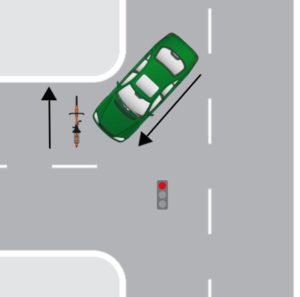 There are usually two scenarios where this type of bicycle accident occurs. Both involve the cyclist riding on the wrong side of the road – in other words, the cyclist is on the left side of the road riding on the left, heading toward traffic.
The cyclist is riding on the left side of the road and approaches an intersection. A car is stopped at the intersection to the cyclist’s left and is making a right. The car does not look right to see if traffic is clear because he is making a right turn. The car pulls out and hits the cyclist or the cyclist hits the car.
The cyclist is riding on the left side of the road. A car is approaching the cyclist head on but may not see the cyclist and a head on collision follows.
RIDE ON THE RIGHT side of the road, going the same direction as traffic. That is the safest place to be.
The cyclist is probably going to be found at fault almost every time in this case. If the cyclist was not flat out the cause of the collision, then he is likely at least contributorily negligent, or partly at fault, because he was not obeying bicycle laws, and in Virginia could not recover for his injuries. Even so, a jury or a judge makes the ultimate determination of whether the car was negligent and whether the cyclist was contributorily negligent.
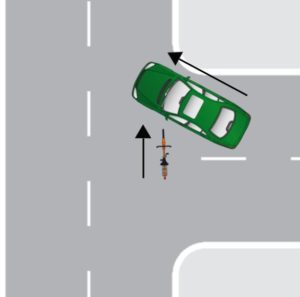 This is one of the most common types of collisions or accidents involving Virginia cyclists. The accident occurs when the cyclist goes through an intersection at the same that a car that pulls out from another street, driveway, or parking lot, to right of the cyclist. The car driver does not look closely and pulls out. The cyclist is either hit on the right side by the front of the car or the cyclist hits the driver’s side of the car.
Slow down. Be alert when you reach an intersection for other vehicles. If you see that a car is coming from the other street or parking lot, slow down enough so that you can stop in time if the car pulls out in front of you. While you do have the right-of-way, it is much better to avoid the accident altogether than suffer the injuries that result from this type of collision.
Make sure you are visible. Whether it’s day or night, you should wear clothes or use gear that make you more visible – although it is especially important at night. For example, wear bright clothes and use a light on your bike.’
Ride more toward the center of the lane. While you should normally ride to the right as you approach intersections or driveways, if you move more to the center it makes it easier for the driver of the car to see you and lessens the likelihood of you being injured.
Make noise. If you have a horn or bell use it. If it is obvious the driver doesn’t see you yell out to get his attention. Again, you have the right-of-way but do what it takes to be unharmed.
Most likely, liability (fault) will be placed on the driver that pulled out in front of the cyclist, provided that the cyclist had the right-of-way assuming the car had a stop sign or for other reasons had to yield to the traffic in the direction the cyclist was traveling.
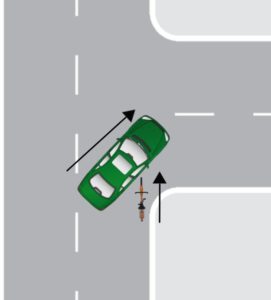
This is one of the more common types of accidents that result in injuries. A car passes a cyclist to the left of the cyclist and then makes a right turn in front of the cyclist. The cyclist is then either hit by the car or cannot avoid hitting the car. This type of accident occurs not only when a car is turning onto a road, but also into parking lots and driveways.
The most obvious way is to be particularly cautious when a car passes you and assume that the car’s intends to make a right.
While it may seem obvious that the car would be at fault, it is not that clear. This type of collision, because it often involves bad injuries, is likely to be litigated, or taken to court. Oftentimes the ultimate question is how time elapsed between when the car passed the cyclist and when it attempted to make a right turn.
If the car had passed then cyclist for a significant time, then it could be established that the car had made its intentions clear to the cyclist and had the right-of-way, so the cyclist should have stopped as the car was making the right turn. On the other hand, if the car does not completely pass or barely passes the cyclist, then the cyclist likely has the right-of-way.
This is a tough one to determine who is at fault. Ultimately it will be up to the jury or a judge to determine who was to blame for the collision.
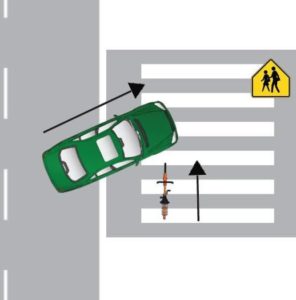 This accident happens when a cyclist is sidewalk riding and attempts to cross a street at the crosswalk at the same time that a car makes a right hand turn. This leads either to the cyclist being hit by the car or the cyclist slamming into the car. This occurs because cars are often not expecting cyclists to be at the crosswalk, even though it is perfectly permissible for them to be there.
Slow down at the crosswalk. Even though it is permissible for you to be at the crosswalk, it does not mean cars will see you. As you approach the crosswalk, be extra observant of cars.
Don’t ride on sidewalks. Again, cyclists are permitted on sidewalks in most localities but some studies indicate that it is more dangerous than riding in the street.
It is likely that the car would be at fault. Pedestrians and cyclists that are using a crosswalk legally have the right-of-way, so it is likely that the car would be found to be negligent. However, a jury or a judge makes the ultimate determination of whether the car was negligent and whether the cyclist was contributorily negligent.
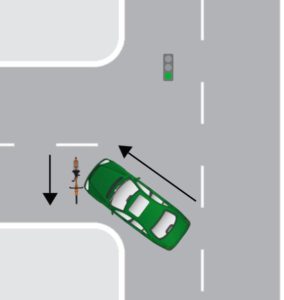 The cyclist is heading in one direction and a car is heading the opposite direction. The car makes a left hand turn directly in front of the bike either hitting the cyclist or causing the cyclist to slam into the car.
Make sure you can be seen: Wear bright clothing and make sure you have a headlight.
This accident is usually due to the inattention of the driver of the car. The cyclist would clearly have the right-of-way and the car just was not expecting or did not see the cyclist. While the cyclist has the right-of-way, it is still up to a jury or judge to make the ultimate decision of liability if the two parties cannot resolve the matter on their own.
These accidents mostly involve children. It occurs when a cyclist rides out into traffic, often darting out between two parked cars into the road. It can also occur when a cyclist is coming out of a driveway or an intersection and pulls right out into traffic.
Stress to your child the importance of being extra careful when riding near roads. If an adult is the cyclist this scenario is almost always caused by simple inattention. Be alert at all times.
If the cyclist is an adult, the cyclist is almost always at fault. Even so, a jury or a judge makes the ultimate determination of whether the car was negligent and whether the cyclist was contributorily negligent.
If the cyclist is a child then it is not so clear. In Virginia children are held to a different standard than adults in that they sometimes cannot be found negligent or contributorily negligent.
For children, the standard of contributory negligence is different. Under Virginia law, a child under the age of seven is incapable of being negligent. Children between the ages of seven and fourteen are presumed to be incapable of negligence; however, if the child is deemed capable of understanding the risks of his actions, and his conduct did not conform to that of a reasonably prudent child of the same age, intelligence, maturity, and experience, then a jury can find that child to be contributorily negligent.
The cyclist and car are heading in the same direction with the cyclist in front. The car runs into the rear of the bike. This can often happen if the cyclist has to drift to the center of the lane from the right part of the lane due to parked cars or doors opening on the side of the road.
If the car simply runs into the rear of the bike it is almost absolutely the car’s fault. However, if the cyclist has shifted in front of the encroaching car it is possible that a jury could determine that the cyclist was partly to blame for the collision.
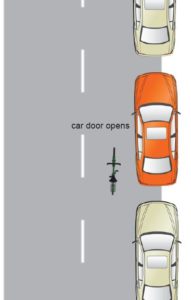 This happens when a cyclist is traveling on the right side of the road – the correct side – along a street that has cars parked on the right side of the road. Meanwhile, a driver in one of the parked cars does not look in the side view mirror and opens the door. If the opened door is too close to the cyclist, the cyclist does not have time to react and he hits the door.
Slow down. When you are on a street with cars parked on the right, slow down so you can stop in time to avoid hitting a suddenly-opened door.
Right close to the center. When you are riding on a street with cars parked on the right side, try to ride more to the center of the lane so that if a car door opens it will not hit you or cause you to crash.
Most likely, the fault will lie with the person exiting their car. The driver is probably negligent, which is simply the failure to use ordinary care, for not looking to make sure it is safe to open the door.
But again, you must remember Virginia is a contributory negligence state. This means that if you as the cyclist are negligent in some way (e.g. going too fast, not riding at night with a light) then you cannot recover for you injuries. A jury or a judge makes the ultimate determination of whether the car was negligent and whether the cyclist was contributorily negligent.
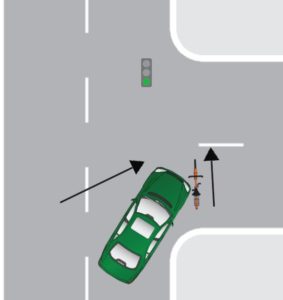 Cars are stopped at a red light. The cyclist pulls up and stops next to the first car in line at the light. The driver of the car does not see the cyclist. The light turns green. The cyclist goes straight and the car makes a right hand turn. The car may or may not have a right blinker on.
Do not pull into the blind spot of the car – in other words, don’t stop right next to the car. Stopping behind the first car instead allows the driver of the car to see you and also allows the cyclist to follow behind and be out of the way of the car when it makes the right turn.
Pull to the front of the car. The other option is to ride far enough in front of the first car that they can see you through their windshield.
This scenario is much more difficult than others. Some of the decision will depend on the specific facts of the accident, such as did the car have its blinker on, was the cyclist in the blind spot of the car, was the driver being attentive, etc. It is still likely that the car would be found to be negligent.
HOWEVER, this scenario creates much more argument that the cyclist was negligent. If the cyclist pulls into the blind spot of a car that has its right blinker on then I think it makes it hard for the decision-maker to determine that the cyclist was not contributorily negligent. Remember that some negligence on the cyclist’s part in Virginia means that he cannot recover for his injuries.
Knowing who is responsible for a bicycle crash is not always straightforward, and the outcome can depend on small details about how the accident happened. Suppose you or someone you care about was injured in a bicycle accident in Virginia. In that case, an experienced bicycle accident lawyer can evaluate the facts, explain your options, and pursue compensation on your behalf. Contact the Warren Law Firm today to discuss your case.